Thursday, February 3, 2022

The Bridge


 For Grandpa
“….Between my finger and my thumb
The squat pen rests.
I`ll dig with it.”
Seamus Heaney-Digging

        
1
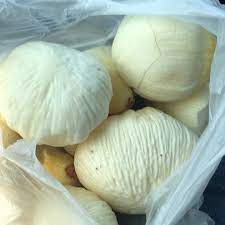
I remember the first half of palapea,
My mom offered me one afternoon
As I was squatting opposite her
On the newly daubed floor
Of the old kitchen
Chatting with her about some matter at school
As she was preparing the dinner.

With the crispy skin, ridged,
And yellowish like butter on the head,
With a crown of brownish fibrils,
And snow-white on the bottom,
With soft cottony flesh,
It tasted so coolly delicious,
On my tongue,
Tingling my proverbial taste-buds.
        
2
My grandfather used to bring us many of them,
Strung like white bulbs on a raw ekle,
When he returned from Siriwardena mudalali’s,
Where he removed husks from coconut,
My father would say, for chickenfeed,
Until a rash on his legs,
Forced him to quit his job.
      
3
Once Jusiappuhami, the cart-man, sold palapea,
By the road-side,
At the northern boundary fence,
Of our school.
In an open box made of rough-hewn mango planks.

He`d keep his merchandise.
His charges for them were proportionate:
The bigger ones would fetch five rupees each,
And the prices would rise
In direct proportion to the sizes.
But the cheaper smaller ones, we found out soon,
Tasted better.

We would constantly badger our moms,
For money to buy them,
During the interval,
Over the barbed wire fence,
Until our principal,
For reasons that we never knew,
Forbade him to ply his trade,
At the fence by the jak tree.

After some time, we heard,
Jusiappuhami was confined to the bed
Having been attacked by his own bull
That dragged his cart,
And a little later on
We learned he’d died.

4
One August over two decades ago
I persuaded my next-door friend,
To go to Siriwardena mudalali’s,
Where with dagger-like, spiky knives,
We coerced palapeas out of the coconuts,
Split with a curved machete,
By a shabbily-dressed, stony-faced woman,
Who seemed to fit the definition of a shrew,
And put them into the old grocery bags,
We`d taken with us stuffed in our pockets.
Once I`d been cloyed with my spoils,
I offered them,
With uncharacteristic generosity
To my mother and my brother.
        
5
Now my grandfather and his employer
Are both no more here, either
And my friend is a coconut vendor himself,
And I, a rustic poet with an unshakeable past
Trying to link the two worlds together
With the bridge of language.

Let me be the bridge.
Let me fill the gap.

Saturday, June 6, 2020

Picking Eraminiya

Along the grassy footpath
Running atop the wide bunk
That walled the brook from Piyadasa’s paddy-fields,
We shuffled on through the dense sedge,
Peppered with Nidhikumba bushes.

Lining the huddle of king coconut trees
Over the brook,
Like old sentinels,
Stood a row of Frangipani trees,
Bearing more flowers than leaves on its gnarled branches
The mute witnesses to the start of time.

We forded the shallow brook
Whose murky waters were infested
With larvae and tadpoles that swam forever
And where the briery Eraminiya bush,
With its rash of green and scarlet nuts,
Lured us out of our way.

I, the taller of the two,
Held down the wiry, springy branch,
Scuffing the softer skin on my palms,
For my friend, the nimbler picker,
To pick the ripe nuts.

He picked the nuts off the thorny branch,
Into a habaralagotuwa,
Teetering on a scrawny Pila tree,
Teeming with dry prods.

The grazed skin on my palms and forearms,
was smarting and bled.
Still, I held it down
With grim determination.

As soon as we`d harvested enough,
I let up my grip on the prickly branch,
And let it spring back.

Sour and sweet, sweet and sour
The teeny nuts tasted
So like life.
So much so like life.

Blank


Still, the memories assault me
With the unforgiving force of a hurricane
The invisible wound
Inflicted so long ago
Feels so recent and raw as a moment ago
Love is so short but forgetting so long
The eternal wisdom of Neruda’s lines
Ring painfully true
In my mind’s ears.

Along the corridor
By our classroom
You still stroll by smiling at me
With the smile
I still believe, is the loveliest
of the whole universe.

You, my love, still take up
So much space in my heart’s abode
That there’s hardly any room
Left for another.

Anything but blank.

Infinite.

In Spite of the Ravages of Time

“…Age has no reality except in the physical world. The essence of a human being is resistant to the passage of time. Our inner lives are eternal, which is to say that our spirits remain as youthful and vigorous as when we were in full bloom…”
Gabriel Garcia Marquez – Love in the Time of Cholera

Returning from the shower,
I got dressed for the next virtual meeting
A t-shirt over a pair of shorts
And walked over to the looking glass
 And began combing my hair
Unkept, damp and dishevelled
Greying fast at the temples
And on the rest of my head, but a little less so
My two days’ stubble too showing more silver than black
At the vanity’s irrepressible urge
I scissored the greying sideburns out…

Scrolling down my Facebook wall
In a coincidence of coincidences
I stumbled on a photograph of her
Is this really her?
My eyes faltered for a moment
Despite the flash of recognition.
Lost was the glow of her plump fair face
And her flirtatious smile
I’d been mad about then.
And the gleam in her
Bewitching brown eyes….

In spite of all the ravages of time,
Far too clearly visible
On our once youthful visages
And in our once happy-go-lucky lives
I know sans any doubt
In the deepest of my heart
The flame of my love for her still glows
Where I still burn
Like the proverbial moth
But, also unlike it
I still burn far too many times over
Over the embers of memory.

The Epitaph

“…like a shipwreck we die going into ourselves…”
Only Death - Pablo Neruda

Still astride the bicycle,
I let it lean against the dusty old
Crumbling bank of the sidewall
Littered with an assortment of ropes,
And a rusty metal bucket
Where sat some empty bottles with rusty caps
In a tight squeeze,
Before I climbed out.

I galloped the single step,
Clutching the rickety pole
Tied to the triangular end of a rafter,
A handrail of the oddest sort,
And stepped on to the landing,
Carpeted with an old gunny sack,
Where I felt the grains of sand
Crunch beneath the soles of my slippers.

The well-sawed, but cheap sandy double door
Had swung wide open
Both parts resting against the wall,
Where the limewash barely concealed
The plastered cracks,
Standing out like continents
On the world map.

As I walked past the grandma’s bed,
I almost heard her mumbling, ‘Kollo…’
She must have mistaken me for my father, her son,
Lying on her back towards the wall,
On the clumsy bed sheet spread over the rush mat,
Covering the coir mattress,
Whose gunny sack cover had torn,
At several places.

I slipped in,
Without saying so much as a word,
So accustomed had I grown
To taking her grumbles and gripes for granted.

And I must have been deaf,
To the plain fact that her voice,
Was more markedly feeble than ever.

When I walked past her bed again,
She was lying on her back facing the wall,
Next to the bed,
Her right hand, almost limp,
Stretched outwards to her right,
Rested on the bed.

I convinced myself
She was breathing yet;
It was only when Aunt Rani, our benign neighbour,
Who came to feed her
Pronounced her dead,
That I knew I’d got it all wrong,
But, still wished I were right.

Perhaps, that was the way to die:
No final words, no last will,
No lachrymose leave-taking;

Now she was alive,
Now dead.

Thursday, June 18, 2015

The Definition of Certainty

 For TNJ


“…Our sincerest laughter
                With some pain is fraught;
Our sweetest songs are those that tell of saddest thought…”

P.B. Shelley – To a Skylark

For hours I remember,
I’d keep watching the corridor,
Running by our classroom,
To catch a glimpse of you,
Knowing  you’d gift me a smile
I fondly recount even after the passage
Of a decade and a half.

On many a morning,
I’d come, soaked in sweat after a two miles’ ride from home,
To see you sweeping the leaves,
Around the Nelli tree
Where I’d see you hanging out with your friends.

The Angel of angels!
My heart still yearns for seeing you smile
Into my eyes,
For seeing the mischievous gleam
in your brownish eyes,
For chattering with you for hours on end
On a multitude of frivolities.

In a world that’s full of uncertainty
and change,
For you, however,
I’m the definition of certainty.
I’m the definition of constancy.

Tuesday, March 5, 2013

You are the wind beneath my wings


Mr.Weerasuriya watched his wife picking wathusudda with their daughter, Sachini, a six year old. Upeksha, his wife picked the flowers and cast them into the plastic bowl the child held in her hands. When she saw him watching them, she smiled at him the same dear smile she had given him when they had first met at the school some 15 years ago. It was clear that her youthful features had begun to fade faster than his. But, he knew they had grown dearer still to each other. And Sachini`s arrival into their lives had increased their conjugal bliss almost thousand-fold.

Mr.Weerasuriaya, in his early thirties, was a lecturer in Accountancy at Sabaragamuwa University. He was of medium height with an intelligent brow, sharp eyes beneath dense eye-brows and a small mouth that occasionally broke into a tender smile. His complexion was more dark than fair, but he was certainly not coal-black. Upeksha, his wife, was fair and buxom with a fine mouth, large brown eyes and cheeks that dimpled when she smiled. It was with her smile that she had bewitched him, he remembered with a smile. The folded newspaper lying on his lap, be now began to reminisce dreamily.

He met her while they were both studying for their A/Levels in Commerce stream. She outdid him at the studies and at the exams. In fact, it was from her that he got further clarifications about some concepts in Economics and some sums in Accountancy. When the results had been released, it was obvious that they were both qualified for university entrance. And she had outranked him. But so poor were their parents that it seemed that neither of them could afford to enter university and continue their higher education.

Upeksha, the unselfish girl, then suggested that he enter the university and told him she would secure a job at a garment factory. It, she assured him, would help him continue his studies at the university. First, he never liked her suggestion, his masculine pride forbidding him to depend on her and wanted to find a job. But, as she pressed him continually, he gave way and entered the University of Kelaniya to read for a degree in Accountancy. Despite her parents` warnings and admonitions, she got a job as seamstress at a garment factory nearby and gave him over ¾ of her monthly pay to meet his expenses. As he studied at the university, he was constantly driven by the need to excel at his studies as he always felt for her over her generosity. His parents too helped him in the small way they could. His hard work eventually paid off and he graduated summa cum laude from the University of Kelaniya, which offered him the chance to join the academic staff as a probationary lecturer. Later on, he joined Sabaragamuwa University closer to his home town.

Overjoyed at his success, his parents brought him proposals from wealthy families, ready to offer whopping dowries. His mother was in earnest and constantly tried to persuade him to forget Upeksha and get married with a richer and more educated girl. But, he never heeded her reasoning and went on to marry Upeksha. Although his mother still chided him for his decision to marry her, he was more than certain he had done the right thing and he would never regret his decision.

And they were a happy family now. He knew it was love, pure love and not marriage that bound them to each other so strongly. It was Upeksha he knew who was the wind beneath his wings. He loved her for that so immensely, so completely. It was not the sort of love that evaporated with time; rather, it drew them closer and closer still to each other and strengthened their ties as time went by. Such love, he knew, worked wonders.

He felt a spray of cold water on his face, which awakened him from his reflection and saw Sachini grinning at him with a bowl of flowers with her smiling mother behind her.


Thursday, May 31, 2012

Grandma`s Death


 When I entered the living room,
Through the rear door,
She was still alive,
And heard her almost mumble, ‘Kollo…’

Mistaken me for my father, her son.

I slipped in,
Without saying so much as a word,
For I was used,
To taking her grumbles for granted.

Perhaps I was insensitive,
To the plain fact that her voice,
Was more markedly feeble than ever.

When I walked past her bed again,
She lay facing the wall,
Next to the bed,
Her right hand, almost limp,
Stretched outwards to her right,
Rested on the bed.

I convinced myself
She was breathing yet;

It was when Aunt Rani, our benign neighbor,
Pronounced her dead,
That I began to doubt myself.

Perhaps, this was the way to die:
No final words, no last will,
No lachrymose leave-taking;

Now she was alive,
Now dead.

Saturday, May 5, 2012

Question the Status Quo


Just recently, I finished reading ‘Different Thinking: Creative strategies for developing the innovative business’ by Anja Foerster & Peter Kreuz, two European-based management thinkers. I would like to share with our readers a few insights from this illuminating book.
“At dusk on Friday, 13 December 1907 the sailing ship Thomas W Lawson sank off the Scilly Isles in the English Channel…” goes the opening line of The Attacker`s Advantage by Richard N. Foster. What happened? The owners of the colossal seven-masted schooner wanted to make a splash in the commercial shipping in a bid to eclipse the steamers which were becoming popular fast. But, it never worked out. According to Foster, “The age of commercial sailing vessels ended with the Thomas Lawson, and from that moment on, the steamers ruled the seas.”
Obviously, the owners of Thomas W Lawson did not bother to question the status quo and were completely blind to all signs of technological progress. And the cost of failure was enormous. We can`t change history, but we can learn from it. What is sad is that even today there are managers who cling tenaciously to obsolete products, processes and attitudes. Seemingly, it`s no myth that the spirit of Thomas W Lawson still sails the waters of our business world.
The majority of managers tend to like the familiar, the known or the tried and tested. Similarly, they more or less resist change. This is why it is so difficult for them to deviate from the established practices. Change may be profitable, but there is inherent risk whenever you go for it. Change and risk, however, is an essential component of growth. So, questioning and where necessary, challenging the status quo is critical to business success.
Let`s take another example. In 1977, Zundapp, the Bavarian motorcycle manufacturer had a workforce of 1900 and produced 115000 mopeds. Sans the fascination of a BMW or a Harly Davidson though, the Zundapp mopeds were still popular because they were both robust and inexpensive. But, the Zundapp management failed to recognize the changes taking place in the environment around them. For example, insurance premiums shot up and legislation was passed making it mandatory for moped riders to take a driving test which saw the moped sales taking a nosedive. Consequently, in 1984, they were forced into liquidation.
Digital Equipment, the American computer manufacturer too fell prey to the Thomas Lawson Syndrome. So blind had they been to the developments taking place in the competitive landscape that they were caught completely off-guard by the development of the personal computer.
However, it is not that easy to change the conventional mindset of the believers and the defenders of the status quo. This`s why Guy Kawsaki, a marketing expert says: “The defenders of the status quo will doubtlessly tell you that it is not possible or necessary to implement your idea. After all, they are the people who established the status quo, and now they are under attack from you! And so if you want to bring about a revolution, you must steadfastly ignore these arguments.”
So, while giving due consideration to the risk, uncertainty, incomprehension and confusion inherently associated with change, in this fast-moving moving world, you always have to be ready to change your strategic direction without waiting for confirmed insights. 

Courtesy:http://lmd.lk/?p=7301

Sunday, July 10, 2011

Anticipation


Tomorrow, I thought,
I’d surely meet her,
The sweet trouble-maker,
Persistently taxing my time,
But enrapturing my lonely heart,
With her sunshiny presence,
And warm, loving, blithe words,
Irradiating my heart’s gloom…..

But now I feel,
I’d not meet her tomorrow,
And that our rendezvous,
Would have to be postponed,
For an indefinite time……

Thwarted expectation,
Stymied hope,
Distresses my childish heart,
Constantly yearning,
For her warm, wonderful friendship,
Her blithe smiles,
And warm affectionate words,
But anticipation is still alive in my heart,
For a longer, lovelier, better rendezvous!

Tuesday, June 28, 2011

The Printout


For Mr. Shantha Herath (Faculty of Business Studies and Finance, Wayamba University)

“A bit of fragrance always clings to the hand that gives you roses.”
A Chinese Proverb

Rummaging through,
A file of old lecture-notes,
I came across it – a printout,
Of a front-page,
Of an assignment.

A flowery border,
Fencing a rainbow text.

A request, a rebuke, and resentment!

A smile, a signature and love!

The printout evoked memories,
As indelible as stone inscriptions,
As deep as life.

One day, I know, it’ll fade away
Into nothingness.

But not his kindness.

Wednesday, June 22, 2011

The Monitor


I saw the grotesque creature,
Lying placidly,
On the recently trimmed grass,
In our garden,
In embarrassing oblivion,
To the man-made reality,
That it didn’t belong,
In our garden,
Or in our civilized world…..

Its grey spotty skin,
Which thorns or pricks can’t puncture
Or jagged stones,
Cannot tear or graze….
And its sharp, serrated tail,
Possessing tremendous strength,
With which it whips away the approachers….

From a safe distance,
I stood watching it,
With a long pole in my hand,
With which I poked at it,
Every now and then….

For all its ferocity,
It lay passive, patient, and tranquil,
Like a real gentleman,
Never once resisting,
My cowardly mean assaults….

Soon I gave up,
My attempts to drive it away,
Realizing that,
I was but a spiritless coward,
Trying in vain,
To bring down a mountain,
With a fragile pole….

Before long,
It crawled away,
In magnanimous resignation,
Leaving behind for cruel cravens like me,
A silent lesson of patience!

The News-Presenter


When I saw her climb the staircase with grace,
My heart began to flutter despoiling my ease.
From where I stood, I clearly saw her excited, red face,
I was more excited than her, to talk about my case.

She tightly clutched the papers with trembling fingers.
How frightened she looked that moment in my memory still lingers.
And off her blushed face, my eyes I could never take,
It was all like a dream, from which I refused to wake.

With jealousy I watched all eyes fixed on her face.
They forever kept looking at her, those gazers so base!
She belonged totally to me, that I wanted them all to know,
They shouldn’t question my claim, she wasn’t mine yet though.

Mesmerized by her beauty, her I kept watching.
With her, my sweet girl, few girls could be matching.
Little of what she presented made any sense to me,
As I dived deeper and deeper in the Joy’s vast sea.

Now that, like a queen, she was descending the staircase,
I could closely watch her pretty, flushed face.
I don’t want to lie; she really wasn’t the best,
But she was my girl-to-be, and little mattered the rest!

The Last Rite


Said the chief monk, ‘It`s time
for pan wadeema now…’

We, her grand-children, drew closer,
As my father set right,
The upended cup,
On the white plate.

As the monks,
Seated opposite the coffin,
Enwrapped with a white-cloth,
Water spouted out,
From the porcelain jug,
Held over the cup,
By all of us.

It slowly filled,
And water brimmed over,
Into the plate,
Where it rested.

Water:
The ever-young, the ever-fluid,
The ever-abundant, the ever-lasting;

What has it to do with life?

I wondered and wondered.

The Cortege


“…Let the lamp affix its beam…”
Wallace Stevens -  The Emperor of Ice-Cream

The cortege left our home,
In undignified haste.

The coffin rested in peace,
On six uneven shoulders:
Two at the head,
Two at the feet,
Two in the middle.

The bearers, it seemed to me,
Walked and talked,
Sans the slightest semblance,
Of solemnity, civility,
Or propriety.

They teased us into spelling,
Two of the six,
And poked fun at me,
As I walked like a crab,
Under the unfamiliar dead-weight.

Amid jokes, laughter and fun,
No one even pretended,
To bemoan the departed.

What a grave affront to the deceased!

But, they were right, perhaps.

Grief couldn`t set up a hut,
Dig a grave or bear a coffin;

And the dead was dead.

Tuesday, June 21, 2011

Alternating between Occasional Sanity and General Madness


“….Your noble son is mad.
Mad call I it. For, to define true madness
What is`t but to be nothing else but mad…”
William Shakespeare – Hamlet

A new batch has arrived, the rag season has commenced, and the raggers are having a rip-roaring time. I remember a former student leader defining the term ragging, saying that ‘RAG’ stood for ‘Royal Academic Game.’ I also remember him narrating some anecdote about its origin. Whether he was telling the truth or whether it was some fancy false definition he himself had been gulled into believing previously or whether it was his own personal definition about ragging I do not know, however. Whatsoever might be the origin of the term ‘rag’, I must say, ragging has never appealed to me. For me it was never a pleasure to be ragged; whether it gives one joy to rag others I really do not know, because I have never ragged anyone myself( maybe I am boasting a little too much about my own virtues!)

Let me tell you a little about our rag season. During it, though I hated to get ragged, I remember, there were some guys (my batch-mates) who told me themselves that they enjoyed being ragged. They told me that they found it so absolutely funny that they looked on it as a wonderful source of amusement and that they really beguiled their time by getting ragged. There were also others who endured it simply because they believed it was sort of compulsory for them to experience it and that rag season itself was their induction into the university culture and the initiation of their university career. The majority of my batch-mates were of this opinion. Some others were, however, diametrically opposed to ragging like I myself was, but were scarcely brave enough to stand up to the raggers, those boisterous bullying seniors.

There was, however, one guy who flaunted his opposition and boldly fought with the seniors who tried to daunt him with their awful blusters. He alone refused to be ragged and to march in a line into the canteen where the process of ragging took place. So he earned the opprobrium of the seniors and the objectionable nickname ‘alaya’ (potato) and came to be regarded as an outcast, a sort of pariah. After the rag season, however, the batch decided to oust him from it as a potato. His cronies raised objections, but they were literally drowned in the collective cacophonous dissent of the (malicious) majority so to speak. Because he refused to be ragged and fought with those foul-mouthed bullies like a man, or because it was decided that he should be disowned, or because he happened to find a better education opportunity than what a government university could offer him, or because of all these reasons, or because of some other reason, he left the university.

The story I narrated is a true one. And I still believe that he was cruelly deprived of his rightful inalienable privilege for university education owing to an obtuse practice introduced into our university system by some scoundrels with parochial political intentions. On another occasion, when we were the second year students running the ragging process, a girl frightened by the harsh treatments she received at the incipience of the rag season decided to quit her university education. After the rag season, a deputation of students paid her a visit at her home and tried to persuade her to return to the university. But she flatly refused to step into what she had felt as hell in the first place. Incidents like this superfluously reflect the deleterious consequences of this asinine primitive practice called ‘ragging.’ Also, they show that ragging is not always about getting some innocent fun as some people say. Undoubtedly, it is necessary that we preclude recurrence of such tragic happenings like these.

Seeking revenge
If you asked a ragger, ’Why do you harass your juniors who are like your own sisters and brothers?’ his first answer would be, ’Look! I don’t mean any harm to them…it’s just fun to tease them a bit…’But if you are sharp enough to penetrate that plausible answer you will see that it is not an honest answer. Maybe you are also clever enough to see the real reason driving most raggers to do what they do. As I believe, most raggers think more or less in the same way as does Shakespeare’s Hamlet:
“…I’m very proud, revengeful, ambitious
With more offences at my back
Than I have thoughts to put them in
imagination to give them shape,
Or time to act them in…”

Understandably, their desire to take revenge, for the ordeals they have had to suffer during their own rag season, on their juniors (because they cannot avenge themselves on their seniors) is the primary motivator for most students to engage in ragging. Because they themselves have been teased, harassed and maltreated in the past out of pure spite or for some other reason by their seniors, they seem to me to be in the persistent belief that their juniors  too must suffer the physical and mental anguish they themelves have experienced over their rag season. The protraction of rag season up to two or three months is a clear unmistakable demonstration of their motive.


The responsibility for the effective and smooth running of this cycle of revenge is often entrusted with the students` union that comes to rescue the raggers when they are charged with indiscipline and offensive behaviour and have to face disciplinary actions. There is no denying that the students` union renders an invaluable service to the whole community of students in ensuring and protecting their rights and privileges by leading them to remonstrate against the corrupt practices of those engaged in the university administration or any measures, taken by the university authorities and posing a threat to the rights and privileges they are entitled to. But in its sphere of operations, students` union is one of the main forces, rightly or wrongly protecting the raggers against the disciplinary actions taken by the university authorities with a view to deterring potential raggers.

Here, it must be stressed that some university authorities are not objective in the prescription of punishments and that they sometimes punish students on trumped up charges based on their personal prejudices without an impartial investigation into the alleged breaches of discipline. On such occasions students` union is obliged to intervene on behalf of the culprits.


Finding a partner
Another important motivator for guys to take part in ragging is to find a girl from the junior batch. Tradition requires that the man should be older than his wife. So the senior guys, possessing this conventional wisdom, have their eyes upon the junior girls. Clearly, there are instances where this traditional rule is simply thrown to the wind by some juniors forming love relationships with their own batch-mates and also by those deviants who dare woo their own senior girls (even during the rag season itself!) and form relationships with them. In the university parlance this second phenomenon is known as getting ‘lambet’, but how and from where this term originated is beyond my knowledge.

Likewise, courting or wooing a girl is called ‘washing’ in the jargon of university students. So amid all the cacophony, din and tumult taking place in the scene of ragging, many senior guys are busy wooing the junior girls, many of whom look to be extraordinarily pliable and are constantly smiling. Maybe they are practising one out of the sixty four spells they are known to possess and these poor doltish seniors have not a clue as to what their intentions are! There are some lucky fellows who succeed in their courtships, but the majority gets rejected once the rag season is over. In the university, however, getting rejected is considered as normal a thing as earning a ‘D’ pass at the exam (I learnt this after I had entered the university on the rebound with a broken heart!) In moat cases, a guy may mope for a day or two and will be his normal self soon enough. Unlike some teenagers, they will not want to kill themselves over a girl’s rejection.

I see I have digressed a little from the theme; but the point I want to make is that if finding a girl is their sole solitary concern, they can do that in a more pleasant, more effective way than teasing, harassing, bulling and yelling obscenities at the freshers who have just entered a milieu completely new and totally different from the school where they have been studying for the past 13 years. The question I want to ask them is: can’t these senior guys be a little more romantic and affectionate in dealing with the juniors?

Slippers, cheap frocks and cardboard files
In our university, during the rag season, the junior guys and girls should wear their respective uniforms as recommended to them by their seniors. A guy should wear only one pair of trousers and one short sleeved shirt over the entire rag season while a girl has to wear the same cheeththa frock throughout the rag season and tie their hair with pieces of black ribbon. They should both wear only rubber slippers themselves. They should each bring with them the same cardboard file no matter how battered it is as long as the rag season exists.
  
Their most noble seniors use the most abusive, most obnoxious terms in the Sinahala language (I had better left them for your imagination!) to address them. No matter how indecent their seniors are, they have to respect them and address them in Sinhala as ‘jeshta uttamaya’(noble sir) When they enjoin them (junior guys) to crawl around the canteen floor sometimes under the tables and over the chairs, they should follow their orders; they should stop as soon as they are asked to stop. No matter how prim and proper they are, their seniors constantly find fault with them. They have a knack for carping. If there is nothing else, they blame one for the way one looks at them. Sometimes they punish you for your mistakes.

One such punishment is that they ask you to play the heater (hetare gesema). You go to a wall and stand with your back to it, place your both elbows on the wall behind you and stretch your legs forward at an angle without bending your knees. The whole exercise puts intense pressure on your elbows as they press into the hard wall, which causes you to feel the sensation of getting heated in a few seconds. In fact, few seniors will be so inhumane as to force you to remain in the same posture for a long time. If my dear readers want to experiment this themselves, they may do it without breaking their backbones!

In addition to this, seniors ask new comers to do physical exercises-those that you used to do at the school in the Physical Education period. If you are too sick to exercise yourself, you can excuse yourself from it. But for that you will have to wear a paper on your shirt or frock displaying the name of some fancy vulgar disease from which you are believed to suffer. It can be a little embarrassing because seniors may question you about the origin and the symptoms of your disease. But it may be far better than over-exercising yourself according to the instructions by those whose knowledge about exercises can be no more than a donkey’s knowledge about the theory of Relativity!

In the lunch-time, girls have to feed the guys standing next to them and vice versa. Sometimes, a few lunch packets are unpacked and the contents are cast onto one big dollop .Then you mix it using your hand like a spade. And you feed your neighbour with that wholesome, highly nutritious food! Egg-sucking is an even more horrible practice and can make you spew up specially if you are over-squeamish. A boiled egg (with its shell peeled off) is passed around a table; each sucks it passes it to his or her neighbour who does the same and passes it to the next person and so on and on. And just imagine the plight of the one who has to eat it in the end!

Conclusion
Rag leaders often argue that the process of ragging helps make bold self-confident undergraduates, that it creates unity and solidarity among the batch mates despite their gender, social status, religion and race or language differences, that it awakens their latent creativity, that they learn to respect their seniors as they go through it, and that, through all these, it makes them more perfect men and women; this argument, however, is not without some element of truth in it. But they deliberately leave out the element of hypocrisy inherent in the ragging.

And I am deeply opposed to ragging because it is totally discordant with the libertarian aspects of university culture, which I most admire, even if the rag season lasts only for two or three months. In my opinion (maybe I am wrong and a little too egalitarian!) no senior student, be he a batch rep, a student leader or a self-appointed rag leader has any right whatsoever to dictate a dress-code to the juniors even if it is only for the ease of identification and for a relatively short period of time; no dull-witted rag leader has any right whatsoever force any new-comer to participate in the ragging against his or her free-will; no senior student has any right whatsoever to marginalize any junior student just because he or she refuses to be ragged.

There is another thing which I should disclose in spite of the embarrassment it may cause to certain parties. After the rag season, these more perfect, more creative junior students go to administrative offices and faculty offices only to address peons therein as ‘Sir’ much to the embarrassment of the lecturers who sometimes happen to overhear such conversations!

The process of ragging certainly has some funny aspects; that may be why some students exclaim, ‘Ragging is loads of fun!’ and enjoy getting ragged. Some others opine that it is wonderful in retrospect. To a certain extent, I have felt this myself. But in retrospect, very few things can be disturbing or horrible. Personally I hail ragging as primitive, barbaric, inhumane, cruel, mean, and degrading and firmly believe that it should be deracinated as soon as possible. If the total extirpation of ragging is out of the question, then I suggest that the degrading aspects of it be totally eliminated while ensuring that no student, male or female, gets ragged against his or her will.

The Confession


Now I am a patient, an invalid confined to a bed, whose sheet and mattress stinks with my urine. A couple of months ago, I suffered a stroke which left me paralyzed. Today I feel like a breathing corpse. If only that stroke had taken my life without leaving me to this endless suffering in this stinking, squalid room! Maybe, I am destined to suffer more. Sometimes I think death will not be half as dreadful as this miserable life I spend as a bed- ridden invalid. Nevertheless, there are times when I dread the Unknown which I will have to explore sooner or later after death has released me from these mortal agonies. The Mysterious Realm which is believed to be lying beyond death might perhaps be little better than these terrible sufferings. Apart from those natural human fears about the Unknown, however, I am also suffering from a terrible sense of guilt dogging my every thought. The painful consciousness of a past error gives me even greater pains than this bedsore, which no medicine can alleviate let alone cure! Now I want you to hear my sad painful story, and I wish to make a clean breast of it, before death can have me in its relentless grip.

It all happened even more than three decades ago when I was a sturdy, middle-aged man. But I can recall the details of it as vividly as if it was just yesterday that this tragedy took place. Then I was working as a clerk at the Zonal Education Office, Narammala. I had six children, three daughters and three sons. At the time, none of them was married. My elder son, a rice merchant then, had a big rice mill. He had employed several guys who performed the laborious task of boiling and drying paddy on the basis of daily wages. Nimal was one of those guys, employed at my elder son’s rice mill.

We were a respectable family in the village. My late father who was a stern confident man inspired the villagers’ respect. At the time, literacy was not nearly as high as it is today. Education, free as it was, was still limited to wealthy influential families. So the majority of villagers were illiterate peasants who just lived from hand to mouth. It was small wonder, therefore, that the fairly literate families like ours could command their respect whether we deserved it or not. Besides, I had land of about twenty acres inherited from my father, which yielded a fairly large crop of coconut. He had also accumulated a fortune of around 100000 rupees by the time he passed away. I know you will scorn at my reference to a fortune of 100000 rupees, because today even small children know that amount is scarcely a fortune. But it was then more than 30 years ago, before the price level had begun to skyrocket under the influence of inflation. Then it was fairly accurate to call such amount a fortune. My late father was a money-lender, not quite unlike that usurer ‘Sherlock’ in Shakespeare’s ‘Merchant of Venice’, a play I would still love to read though I can hardly manage to read anything today. I can still quote some lines from it.
           “I am a tainted wether of the flock,
           Meetest for death; the weakest kind of fruit
           Drops earliest to the ground”
Let me quote another excerpt from it.
                      “And I beseech you,
                       Wrest once the law to your authority;
                       To do a great right, do a little wrong
                       And curb this cruel devil of his will”
I have digressed a little from the story that I am narrating. But you may see that like many of my peers, I am still a worshipper of that literary genius, Shakespeare, and pride myself on being able to quote him so accurately.

My position as a clerk at the Zonal Education Office was rather enviable even among the people who were not so poor. Nowadays I know few people wish to become clerks, but again times were different then. I always tried to live up to the reputation that my late father had earned. I wanted my children to follow my steps and preserve the tradition without tarnishing our family’s good reputation. Moreover, we were from a high caste, so I hardly mingled with those poor villagers from low castes; nor did I want my children to do so. But what I failed to realize was the extent to which they themselves wanted to follow my sound advice. Now I wonder if they ever wanted to follow my judicious advice and whether they just nodded their heads in reluctant approval while totally dismissing my advice in their intercourse with people for the simple reason that they were too decent to contradict me, their bigoted, self-opinionated father.

These days I often hear my elder son say ‘Caste is nothing next to wealth and social position.’ But those days, caste signified a great deal especially when it came to marriage. The parents who overlooked such matters as caste and creed in their children’s marriages were disowned by their relatives. Or maybe I thought so. As I have already said, I wanted my children to follow my steps, but did they really want to live in the same way as I wanted them to do? Or did they just listen to my advice for no other reason than that I was their father who had begotten them and brought them up? These are the questions that I today ask myself, having been confined to this smelly room, this filthy bed. I sincerely doubt if I ever can find answers to these mind-boggling questions. However, now I know my youngest daughter did not want to follow my advice. But I also know that I have seen the truth rather too late.

Every family has at least one recalcitrant child. In our family, unfortunately, that recalcitrant happened to be my youngest daughter, Priyani whereas my second son, Wimalasiri, now a senior lecturer in Kelaniya University was the epitome of obedience. How is it possible that two children, fathered by the same man, brought up by the same parents under the same circumstances, living under the same roof, studied at the same school, receiving the same advice, being accepted and treated in the same way can be as far different from each other as day is different from Night or Fire from Ice? Why I repent today is because I wanted the other five children of mine to be like Wimalasiri. That each child was unique in his own way did not cross my mind until all was gone and I had little choice but to regret my irrational desire.

Priyani was the pet of our family. Maybe she was surfeited with affection since she was the youngest and the loveliest. I, a very punctilious father, a sort of domestic martinet, did not pamper my children, but deep in my heart I loved each of them alike. For them, I always had tender fibers in my heart, but I often chose to dissemble my feelings and play the role model of a strict father. I did so because I wanted all of them to become highly educated, respectable citizens of our country. Does every child of every strict father necessarily become highly erudite respectable citizens? Is being a strict father a necessary formula for producing a good intelligent child? Maybe I should have asked myself those questions some thirty years earlier. I also wanted to pride myself on being the father of such respected children……

Priyani, from her early childhood days showed a stubborn streak. Not that she was a very bad child, but she was a bit too strong-willed. Maybe she had inherited such qualities from me. As she grew older I found her exceedingly incorrigible. Since I wanted her to become a good, obedient, intelligent child, I punished her over-willful acts. I wished from the bottom of my heart to marry my three daughters off to wealthy

influential families from superior castes. Decidedly, it was their character which would be the key for them to be connected with such families. Unlike today, education itself did not count much for a girl in that traditional society where women were supposed to rear children and attend to household affairs. I, a worshipper of established traditions, wanted to instill such ideas into their minds since they were able to understand something. I had scarcely any problems with the other two, but Priyani often tended to disagree with me. Oddly enough, I had no such dreams about my sons and just hoped that they would live up to the reputation of our family whatever might happen. Yet I did not want them to go astray either, so I caned them when I found that they deserved that, but not as frequently as I did so to my daughters in general and Priyani in particular. When I punished her for minor offences, she refused to eat and locked herself up in her boudoir for hours. It was my genial wife and her two elder sisters that eventually coaxed her into taking food. Though I was rather severe on her, she always sought my company when I was home, calling after me ‘Thaththi, thaththi.’ Whether she resented my harshness when I chastised her I still ask myself.

Priyani, a sixteen year old at the time, was prettier than both of her elder sisters. She was friendly with men and women alike. So I and my wife had few reasons to believe that the things were not the same as they did appear to be. Priyani also spoke with the guys who worked in my elder son’s rice mill. When my sons were away and I was at the office it was my wife who oversaw the operations at the rice mill and Priyani helped her. Her sisters were a little too shy and reclusive. But Priyani was an ebullient, confident extrovert. Maybe that was the bane of her life.

When rumors began to circulate that she was having an affair with Nimal, I was furious. ‘How can I let her be married to him, a guy from a low-caste family?’ I asked myself exasperatedly. Besides that, he was not half as educated as Priyani who went to the central college. ’An illiterate beggar!’, that was how I described him to others. Directly I heard this news I asked Priyani if that news was true. But she resolutely denied having any affair with him. Yet it was not easy for her to fool me who was four times as old as she. A seasoned man, I knew smoke could hardly arise without a fire. Angry as I was, I pretended to have believed what she had said. I told her that she was yet a child and that she had to focus her attention on her studies rather than romance. I also told her that she was too young to think about such matters. It, I emphasized, was for us, parents to think about such things when she had reached the marriageable age. Yet, I was determined to discover the truth of this rumor for myself. I resolved to watch her more closely from that day on.

When I realized that I had guessed right, I was enraged, and hit her hard like a madman. I even hit my wife whom I accused of condoning her wrong behavior. My rage had so maddened me that none of them escaped my wrath. That day our house assumed a funereal air. Priyani looked devastated, crying her heart out. Next day I did not go to office and waited till Nimal had turned up. Burning with rage, I walked over to him, and slapped him hard across the face. Yelling at him, I used my favorite phrase, `illiterate beggar’ to insult him. I was so full of wrath that I would have killed him then and there had my elder son not intervened and disengaged me from him. Needless to mention, he was dismissed right away. He walked away, an accursed loser with his shoulders bowed. Never did he return to the rice mill…..

After a lapse of three or four days things seemed to have returned to normal. Priyani was no longer wailing over her dismissed fiancé and seemed active and cheerful helping her mother. She was friendly with me too though I had begun to be rather too laconic following that incident. Deep in my heart, I was happy thinking that the storm was over and all that was a thing of history now……

There is always the calm before the storm. This I forgot choosing to believe rather optimistically that every dark cloud has a silver lining. On that fateful Wednesday while I was working in the office, I felt a severe headache, and told my chief that I was indisposed. A suave, kind-hearted man, he granted me leave as soon as I had revealed my necessity to him. ‘Go to Dr. Wijerathne’, he advised,’ or else you will fall sick and won` t be able to come to the office tomorrow’. Oddly enough, I never was able to go to work the following day. Leaving the office, I went to the dispensary, situated at a walking distance from our office. The physician prescribed some medicines and asked me to rest since he had diagnosed symptoms of fever, beginning to set in. But things so happened that I never got any opportunity to rest or relax that day.

As soon as I arrived at the Narammala bus- stand, I saw a Wariyapola- bound bus pulled in. Already a few passengers had taken seat. I seated myself on a front seat and leaned back, watching the people hanging around the bus-stand. There she was! It was not too difficult for my sharp eyes to make out her, who came strolling towards the same bus hand in hand with that pauper, Nimal. Never ever in my life had I felt angrier. That I was ill never crossed my mind. I sat bolt upright, got out of the bus, and marched towards them. They, being intoxicated with romance, did not notice until I was right under their very noses. When they did notice me, it was too late for them to retreat to a hideaway, so they stood statue-like with their very feet stamped to the ground.

Before I could speak out anything, my right hand whipped her hard across the face twice or thrice. Such was my diabolic rage which compelled me to hit her that I felt my whole body tremble. Gripping her by the wrist, I yanked her towards the bus and climbed her into it. Sitting beside me, she cried all the way home. At her weeping I hardly felt any sympathy with her. The more she sobbed and wept, the angrier I felt. Once we were home I hit her even harder and blamed her in the loudest tones possible. As usual she ran into her room and locked herself up. For more than an hour, I heard her muffled sobbing.

That night it rained heavily as strong howling wind continued to blow, drowning the otherwise annoying croaking of frogs. A muffled howl of dogs reached my ears, as I lay on my bed, too keyed up to sleep. That howl, and hooting of an owl gave me a premonition of a calamity to come......

Next morning coming out of the room, I observed an overcast sky, bleak surroundings and a garden flooding with rain water. I walked to the well stepping sideways to avoid poodles. Taking the pail in one hand, I peered into the well only to see the saddest spectacle I had ever seen in my life. My daughter` s still body was afloat on water. She was wearing the same dress that she had worn the day before. Her body floated on the water with her face downwards. I was so shocked by that horrific scene which greeted my sight that my hold on the rope did loosen, letting go of the pail which plunged down into the space and made a hollow sound as it hit the water. My wife, who was coming towards the well to fetch water, might sense that something was terribly wrong. In my mind` s ear, I can still hear her wailing, her lamenting for the lost child….

In her small boudoir, on her table, we found a short letter she had written shortly before she had committed suicide. In that letter, I can remember, she had written something like this, “…..Thaththi, I hope my death will serve to preserve our family` s good reputation….” Having read this letter, I, who had cried on few occasions before in my life, wept like a child. My poor child had sacrificed herself for the sake of our family` s good reputation!

My wife never blamed me, nor did my children. To all others, it was just another tragic event. They might forget it once her coffin had been committed to the ground or even earlier. Even for us the mourners, time did not cease to commiserate with us, and life ran its usual course despite the vacuum which her lamentable death had left in our lives and was never to be filled. But I knew they (my wife and children) secretly hated me for my cruelty. I knew they hated me just as much as I hated myself….

Today all my five children are living in clover, holding respectable positions being recognized by the society. Their spouses are from affluent, literate, influential families of superior castes. People respect them too. Except a passing remark, Priyani is hardly ever discussed by them who seem to have forgotten all that. All those painful memories seem to have been buried deep under the sands of Time. But I believe they, my wife and children still hate me just as much as they used to do in the past or even more. I have always been a good husband and a dutiful father. Or I think I have been one. But, my wife, will she ever forgive me for what I have done to her sweet, innocent daughter? And my children, will they ever forgive me for what I have done to their gentle, affectionate sister? And Nimal, who was stopped from even attending her funeral, will he ever forgive me for what I have done to his loving, innocent fiancée? Even if they were all to forgive me, could I ever forgive myself for what I have done to my poor, naïve child?